
A car battery can last for years, but it can still develop problems due to heat, age, poor charging, or electrical faults. Amaron batteries are made for regular use, yet even a good battery can become weak when the car has another problem.
Common Amaron battery problems include slow engine starting, low battery voltage, corrosion, battery discharge, swelling, and short battery life. Some issues can be fixed by charging or cleaning the battery, while others need a proper battery test or replacement. Finding the cause early can help prevent a sudden breakdown and avoid damage to other electrical parts.
Common Amaron Battery Problems and Their Fixes
Problem 1: Amaron Battery Is Not Holding a Charge
One common problem is a battery that loses its charge soon after being charged or driven. A healthy battery should store enough electrical energy to start the engine after the car has been parked.
If the battery voltage drops quickly, the battery may have worn internal plates or may be unable to hold a proper charge. However, the battery itself may not always be the cause. A faulty alternator, parasitic drain, loose terminal, or electrical fault can also drain the battery while the car is parked.
How to Fix It
Start by testing the battery’s voltage and condition with a proper battery tester. If the battery is discharged but still healthy, it may need a full recharge. The alternator should also be checked to make sure it is charging correctly while the engine is running. If the battery fails a load or conductance test, an Amaron battery replacement may be needed.
A technician should check for parasitic drain as well. This test looks for electrical current being used when the vehicle is switched off. Finding the real cause helps prevent the new battery from becoming weak again.
Problem 2: Slow Engine Cranking
Slow cranking happens when the starter motor turns the engine more slowly than normal. The driver may hear a weak or slow turning sound when pressing the start button. A weak battery is one possible cause because the starter needs a high amount of current to turn the engine.
Low battery charge, poor terminal connections, a damaged starter motor, or thick engine oil can also cause slow cranking. In hot weather, an aging battery may become more noticeable because heat can speed up battery wear and reduce its useful service life.
How to Fix It
Check the battery’s resting voltage and starting performance first. Battery terminals should be inspected for corrosion and loose connections. If the battery has enough charge but still cannot provide the required starting current, it may be near the end of its life.
The starter motor should also be checked if the battery tests healthy. If the battery is weak, replacing it with the correct Amaron model can restore proper starting power. Always check the required CCA rating, battery size, and capacity before fitting a replacement.
Problem 3: Battery Terminal Corrosion
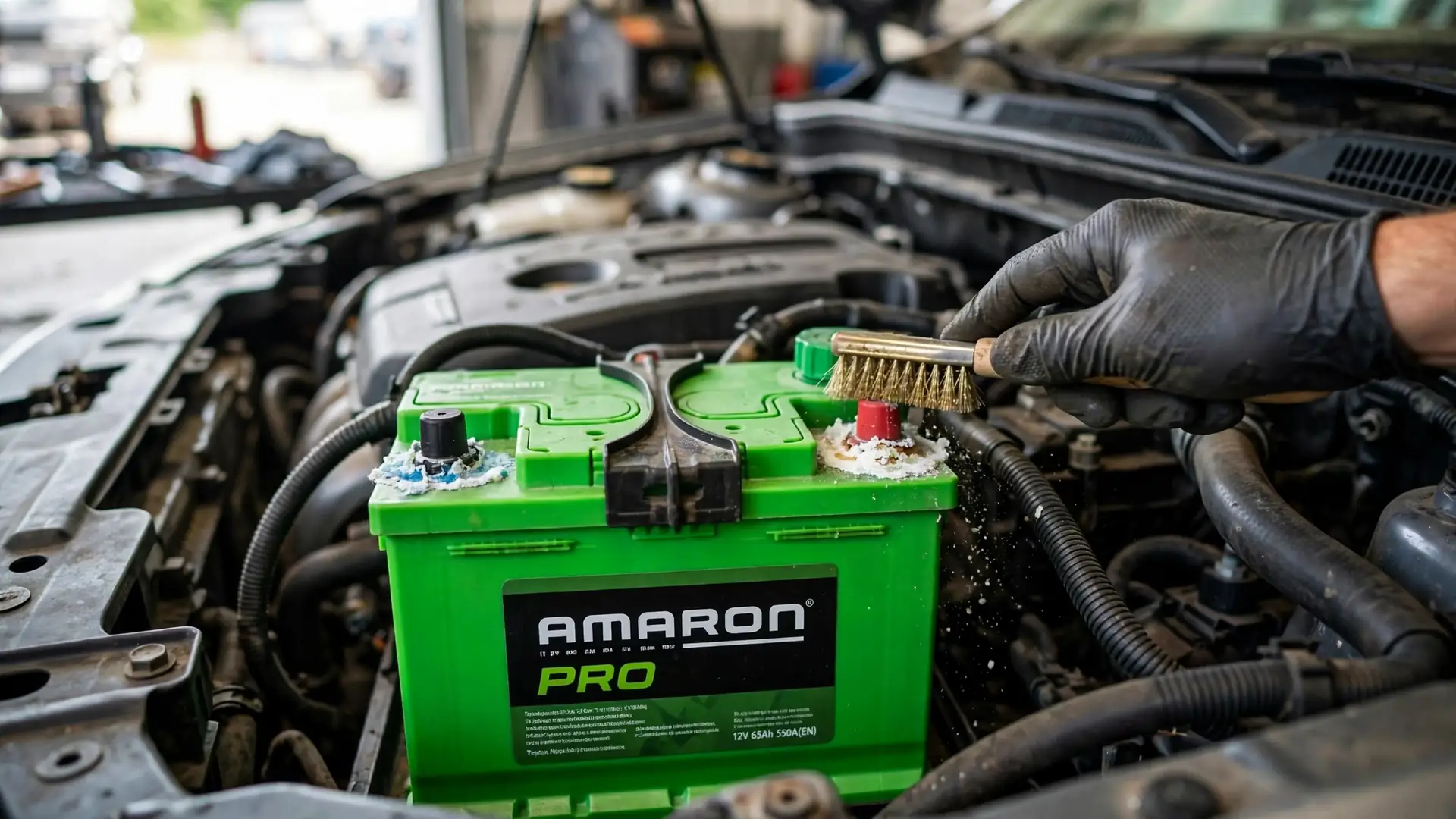
Battery terminal corrosion appears as a white, blue, or green powder around the battery posts and connectors. Corrosion can increase electrical resistance and reduce the flow of current between the battery and the vehicle.
This may lead to hard starting, flickering lights, or electrical problems. Heavy corrosion can become worse when there is electrolyte leakage or poor terminal protection. High heat can also speed up battery aging and may contribute to corrosion.
While a small amount of surface dirt may seem harmless, heavy buildup should be dealt with before it affects battery performance.
How to Fix It
The battery terminals should be cleaned safely, and the connections checked. The vehicle should be switched off before work begins, and suitable safety protection should be used when handling the battery.
A technician can clean the terminal posts and cable ends and make sure the connections are tight. If the terminals or cables are badly damaged, they may need replacement.
The battery should also be checked for signs of leakage. Cleaning the terminals may solve a connection problem, but it will not fix an old or internally damaged battery.
Problem 4: Amaron Battery Drains Overnight
An overnight battery drain occurs when the car starts normally but has a weak or dead battery after being parked for several hours. This can happen because of lights being left on, aftermarket accessories, a faulty alarm system, a damaged control module, or another electrical component that continues to use power after the car is switched off.
This is known as a parasitic drain. A small amount of electrical use is normal because some vehicle systems remain active when the car is parked. Excessive current draw, however, can slowly discharge the battery.
How to Fix It
First, check simple causes such as interior lights, boot lights, phone chargers, dash cameras, and aftermarket audio equipment. If the problem continues, an auto electrician can measure the vehicle’s current draw with the car switched off.
The technician can then identify which circuit is using too much power. Fixing the faulty component or wiring is important because installing a new battery without repairing the drain may lead to the same problem.
If the battery has been deeply discharged several times, it should be tested to see whether permanent damage has occurred.
Problem 5: Battery Warning Light Appears
A battery-shaped warning light on the dashboard does not always mean the battery itself is bad. In many cars, this warning light is mainly related to the charging system. It may appear when the alternator is not producing enough voltage or when there is a problem with the charging circuit.
A damaged alternator belt, faulty voltage regulator, broken wiring, or poor battery connection can also cause the warning light. If the light appears while driving, the vehicle may eventually stop once the battery’s stored energy is used up.
How to Fix It
Do not ignore the battery warning light. The alternator and charging system should be tested as soon as possible. A technician can measure the charging voltage and inspect the alternator belt, wiring, battery terminals, and voltage regulator.
In many conventional 12-volt vehicles, charging voltage may be around 13.8 to 14.4 volts, but the correct range depends on the vehicle. If the alternator is faulty, it should be repaired or replaced. If the battery has also been damaged by repeated undercharging, it may need replacement after the charging fault is fixed.
Problem 6: Amaron Battery Is Swollen
A swollen battery case is a serious warning sign. It can happen because of excessive heat, overcharging, internal damage, or other battery faults. UAE temperatures can place extra stress on batteries, especially when the battery is located in a hot engine bay.
Overcharging can make the battery produce excessive gas and heat, which may cause the case to expand. A swollen battery should not be treated as a normal sign of aging. Continuing to use a damaged battery can create safety risks and may lead to further electrical problems.
How to Fix It
A swollen battery should normally be replaced rather than repaired. Do not puncture, open, press, or try to reshape the battery case. The charging system should also be tested because overcharging may have caused the swelling.
If the alternator or voltage regulator is producing excessive voltage, that fault needs to be repaired before installing a new battery. A technician should handle the damaged battery and arrange proper disposal or recycling. If you notice swelling along with heat, smoke, leakage, or a strong smell, avoid handling the battery yourself.
Problem 7: Battery Is Leaking
Battery leakage can happen when the case is cracked, damaged, overcharged, or affected by internal failure. Lead-acid batteries contain electrolyte, which is acidic and can damage metal parts, paint, and other components around the battery. Leakage can also cause corrosion around the terminals.
A leaking battery should not be ignored because the problem can become worse with continued use. Fluid around the battery may sometimes come from another part of the engine bay, so the source should be confirmed before deciding that the battery is leaking.
How to Fix It
If the battery case is cracked or electrolyte is leaking from the battery, replacement is usually the safest solution. Do not touch battery acid with bare skin and do not try to seal the case yourself.
A technician can remove the damaged battery safely and inspect nearby parts for corrosion or damage. The charging system should be tested as well if overcharging may be involved.
The old battery should be sent for proper recycling. If electrolyte contacts skin or eyes, rinse the affected area with plenty of clean water and seek medical attention when needed.
Problem 8: Amaron Battery Gets Too Hot
A battery can become warm during normal use, but excessive heat is a warning sign. High temperatures already place stress on lead-acid batteries, and additional heat from overcharging or an internal fault can make the situation worse.
A very hot battery may have a charging problem or internal damage. Heat can also reduce battery life by increasing the rate of chemical reactions and water loss inside the battery. Drivers should pay attention if the battery becomes unusually hot during charging or normal driving.
How to Fix It
If the battery is unusually hot, stop using it if it is safe to do so and have it inspected. The alternator and voltage regulator should be tested for overcharging. The battery should also be checked for internal faults, swelling, and leakage.
Parking in shade can help reduce heat exposure, but it will not fix a battery that is already damaged. If testing shows internal failure, replacement is the proper solution.
Never cover the battery with materials that block the manufacturer’s designed ventilation or create additional heat around it.
Problem 9: Amaron Battery Dies After Short Trips
Short trips can make it difficult for the alternator to replace all the energy used during engine starting. This can be more noticeable when the car is started many times in one day but only driven for a few minutes each time.
Air conditioning, lights, screens, and other electrical systems can add to the load. If this happens often, the battery may remain partly charged for long periods. Repeated undercharging can shorten battery life and make starting problems more likely.
How to Fix It
If possible, combine several short trips into one longer drive so the charging system has more time to recharge the battery. However, simply driving longer will not fix a battery that is already worn out. If the battery keeps going flat, it should be tested.
The alternator should also be checked to make sure it is providing proper charging voltage. If the vehicle is parked for long periods between drives, a suitable battery maintainer may help in some cases. The charger must be compatible with the battery type and used according to its instructions.
Problem 10: Battery Has a Shorter Life Than Expected
Battery life can vary from one car to another. High temperatures, frequent short trips, deep discharges, electrical drain, overcharging, and poor maintenance can all shorten battery life. In the UAE, extreme heat is an important factor because battery aging can happen faster in hot conditions.
A battery may also fail earlier if it is not the correct size or specification for the vehicle. Repeatedly replacing batteries without finding the reason for early failure can become expensive and may leave the driver with the same problem again.
How to Fix It
Start by checking the battery’s age and testing its current condition. If the battery is failing earlier than expected, inspect the alternator, charging voltage, terminals, and electrical system. Check for parasitic drain if the battery often becomes weak while parked.
Make sure the replacement battery has the correct Ah capacity, CCA, size, and battery technology for the vehicle. Good driving habits can also help. Avoid leaving electrical equipment running while the engine is off and arrange a battery check before long trips if the battery is older.
Other Electrical Problems That Can Look Like Battery Failure
Not every starting or electrical problem comes from the battery. A faulty starter motor can make the car difficult to start even when the battery is healthy. An alternator problem can cause repeated battery discharge.
Damaged cables or poor grounding can reduce the current reaching the starter. A parasitic drain can slowly empty a good battery while the car is parked. This is why replacing the battery without testing the rest of the electrical system may not solve the problem. A proper diagnosis helps separate a battery fault from another vehicle fault.
How to Test an Amaron Battery?
Battery testing gives a better idea of battery health than simply checking whether the car starts. A technician may measure resting voltage, starting performance, and charging voltage. A fully charged conventional 12-volt lead-acid battery may show around 12.6 volts at rest, although the reading can vary depending on battery condition and other factors.
A load test or electronic conductance test can provide more information about the battery’s ability to deliver starting current. If the battery repeatedly fails testing, replacement is usually more practical than continuing to recharge it.
How to Keep an Amaron Battery in Good Condition?
Good battery care can reduce the chance of unexpected problems. Drivers should keep the terminals clean, avoid leaving lights and accessories on when the engine is off, and have the charging system checked if the battery repeatedly loses power.
The battery should be securely fitted so it does not move while driving. Long periods of parking may require extra attention, especially in hot weather.
Drivers should also avoid choosing a replacement based only on price. The battery’s size, CCA, Ah rating, terminal layout, and technology should match the vehicle’s requirements.
When Should You Replace an Amaron Battery?
A battery should be considered for replacement when it repeatedly fails testing, cannot hold a charge, has a damaged case, is swollen, or struggles to start the engine even after being fully charged.
Frequent jump-starts are another sign that the battery or charging system needs attention. Before replacing it, the technician should check the alternator and electrical system.
This helps confirm that the battery is the actual cause. Installing a new battery without fixing an underlying charging or electrical problem can lead to another failure and reduce the life of the replacement battery.
Conclusion
Common Amaron battery problems include low charge, slow starting, terminal corrosion, overnight battery drain, charging faults, swelling, leakage, overheating, and reduced battery life.
Some issues can be solved with cleaning, charging, or electrical repairs, while a damaged or worn battery usually needs replacement. The most important step is finding the real cause instead of changing the battery without testing the vehicle.
Regular battery checks, a healthy alternator, clean connections, and the correct battery specification can help prevent many problems. If your battery is weak or has reached the end of its service life, Battery Zone UAE can provide an Amaron battery and professional battery replacement service to help get your car back on the road safely.