
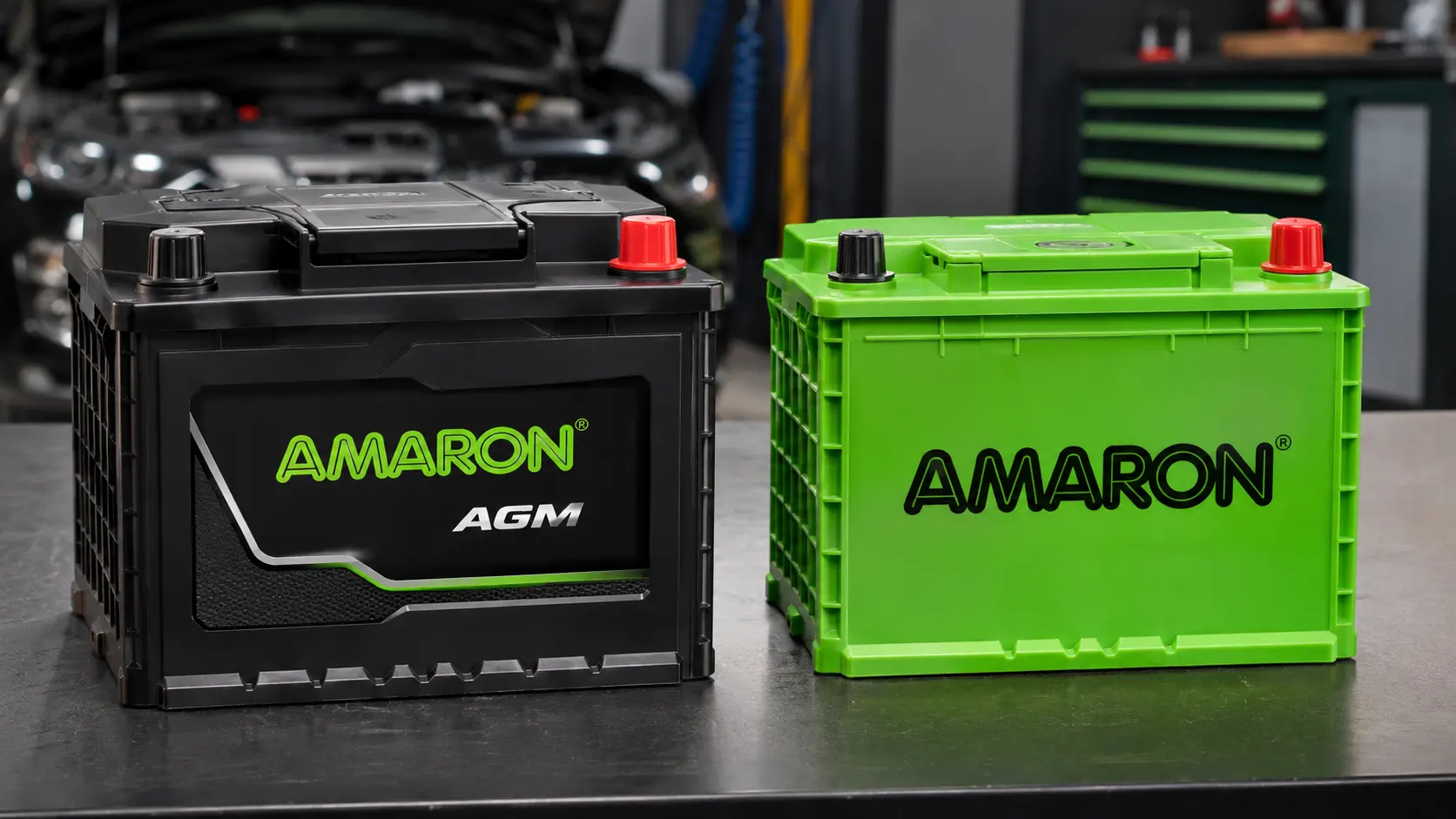
Choosing the right Amaron car battery is important for smooth engine starts and reliable electrical performance. With modern cars using more electronic features, battery technology can make a real difference in daily driving.
The main difference between AGM and traditional lead-acid Amaron batteries is how they store and deliver electrical power. AGM batteries hold their electrolyte in special glass fibre mats, while flooded lead-acid batteries use liquid electrolyte around lead plates.
AGM models generally offer better vibration resistance, faster charge acceptance and stronger support for cars with high electrical demands. Traditional flooded batteries are usually more affordable and work well in cars with basic electrical systems.
Both types use lead and sulphuric acid to produce electricity, but their internal design affects their performance, care needs, and cost. Understanding these differences can help you choose a battery that matches your car and driving habits.
What Is an AGM Amaron Battery?
AGM stands for Absorbent Glass Mat. This battery uses thin glass fibre mats placed between the lead plates. These mats absorb and hold the battery’s electrolyte, which means the acid does not move freely inside the case.
This sealed design helps reduce the risk of acid leaks during normal use. AGM batteries are designed for cars that need a steady power supply for several electrical features.
They can support start-stop systems, advanced safety features, electronic controls, and other power-hungry equipment. Their low internal resistance also helps them accept charge more quickly than many standard flooded batteries.
How AGM Battery Technology Works
Inside an AGM battery, the glass fibre separators hold the electrolyte close to the lead plates. This arrangement allows the chemical reaction to take place efficiently and helps the battery deliver current when the engine starts.
The battery is usually valve-regulated, meaning it controls internal pressure through safety valves. It is not designed to be opened for adding water.
What Is a Traditional Lead-Acid Amaron Battery?
A traditional flooded lead-acid battery contains lead plates placed in a liquid electrolyte made from sulphuric acid and water. When the battery supplies power, a chemical reaction between the plates and electrolyte produces electricity.
The alternator restores much of the stored energy while the engine runs. These batteries are common in cars with standard electrical systems and no advanced start-stop feature.
They are usually less expensive than AGM models and can provide reliable starting power when correctly selected and maintained. Some flooded batteries have removable caps for checking electrolyte levels, while maintenance-free versions use a sealed or low-maintenance design.
How Flooded Battery Technology Works
When the engine starts, the battery sends a high amount of current to the starter motor. This turns the engine until it starts running. During normal driving, the alternator supplies electrical power and recharges the battery.
The electrolyte helps carry out the chemical reaction needed to store and release energy. Over time, heat, deep discharge, and poor charging can reduce the battery’s ability to hold a charge.
AGM vs Lead-Acid Amaron Batteries: Main Differences
Although both battery types use lead-acid chemistry, their construction creates several differences. AGM batteries hold the electrolyte in glass mats, while flooded models use free-flowing liquid.
This affects their resistance to vibration, charging behaviour, and maintenance needs. AGM batteries are often better suited to cars with start-stop technology and higher power demands. Traditional flooded batteries can be a practical choice for older or basic cars that do not need these features.
Feature | AGM Battery | Traditional Flooded Battery |
Internal design | Electrolyte held in glass mats | Liquid electrolyte |
Maintenance | Sealed, no water top-up | Depends on model |
Vibration resistance | Generally higher | Generally lower |
Charge acceptance | Usually faster | Usually slower |
Deep discharge tolerance | Better in many designs, but not immune to damage | More sensitive to repeated deep discharge |
Start-stop use | Suitable when approved by the car maker | Usually unsuitable for AGM-required systems |
Price | Usually higher | Usually lower |
Installation | Must be fitted in the correct position and specification | Must match the vehicle’s battery requirements |
AFM Vs Lead-Acid Amaron Batteries: Key Factors
Starting Power and Cold Cranking Amps (CCA)
Starting power is one of the most important factors when choosing a car battery. Cold Cranking Amps, or CCA, measure how much current a battery can deliver for 30 seconds at -18°C while maintaining a voltage of at least 7.2 volts for a 12-volt battery. A higher CCA rating can help a battery turn the engine over in cold conditions.
AGM batteries often provide strong starting performance because of their low internal resistance and plate design. However, a flooded battery can also have a high CCA rating. Always compare the actual CCA values of the available models instead of assuming every AGM battery is stronger.
Charging Speed and Charge Acceptance
Charge acceptance describes how well a battery can take in electrical energy from the alternator or a suitable charger. AGM batteries generally accept charge faster than traditional flooded batteries because of their internal construction and lower resistance. This can be useful in cars that make frequent short trips, where the battery may have limited time to recharge.
Flooded batteries can take longer to recover after starting the engine or using electrical features. However, charging speed depends on the battery’s condition, temperature, alternator output and charging system. Using the correct charging voltage is important for both types. An unsuitable charger can lead to poor performance or early battery damage.
Battery Lifespan and Long-Term Performance
The lifespan of an Amaron battery depends on its type, quality, driving conditions and care. AGM batteries often handle repeated charging and discharging better than standard flooded batteries.
They are designed for cars that place greater demands on the battery, especially those with automatic start-stop systems. Traditional flooded batteries can provide reliable service when used in suitable cars.
However, frequent deep discharge, high engine-bay temperatures, loose connections and incorrect charging can shorten their working life. There is no fixed lifespan that applies to every AGM or flooded battery. The actual result depends on how the car is used and how well its charging system works.
Factors That Affect Battery Life
Several conditions can affect how long either battery type lasts:
- Heat: High temperatures can speed up chemical reactions and increase battery wear.
- Short trips: Frequent short drives may not give the alternator enough time to recharge the battery.
- Deep discharge: Leaving lights or electrical features on can drain the battery and cause damage.
- Charging problems: A faulty alternator or unsuitable charger can affect battery health.
- Poor connections: Loose or corroded terminals can interrupt current flow and create starting problems.
Maintenance Requirements
AGM batteries are generally maintenance-free. Their sealed construction means drivers do not need to check or refill water levels. However, maintenance-free does not mean they need no attention. The battery terminals, charging system, and battery condition should still be checked during regular car servicing.
Some traditional flooded batteries require electrolyte level checks and distilled water top-ups when the design allows it. Maintenance-free flooded models may not need this work. Drivers should never open a sealed battery or add water unless the manufacturer specifically allows it. Regular testing helps identify a weak battery before it causes starting trouble.
Vibration Resistance and Heat Performance
Road conditions can expose a car battery to constant movement and vibration. AGM batteries generally offer better resistance because their glass mat separators hold the electrolyte and help keep the internal components in place. This makes them useful in cars that face rough roads or have higher electrical demands.
Traditional flooded batteries can also work reliably in normal driving conditions, but their liquid electrolyte and internal design may make them more sensitive to vibration. Heat is another important factor.
Neither battery type is immune to high temperatures. In hot regions such as the UAE, battery checks and correct installation are important because high under-bonnet temperatures can speed up battery wear.
AGM and Flooded Batteries for Start-Stop Cars
Start-stop technology switches the engine off when the car stops, such as at a traffic light, and restarts it when the driver is ready to move. This helps reduce fuel use and exhaust emissions in suitable driving conditions. However, it places extra demands on the battery because the engine may restart many times during one journey.
AGM batteries are designed to handle more frequent charge and discharge cycles than standard flooded batteries. Some cars use Enhanced Flooded Batteries (EFB), which are another battery type made for start-stop systems.
The correct choice depends on the car maker’s requirements. If your car originally uses AGM, replacing it with a standard flooded battery can lead to poor performance and battery-related system problems.
Price Difference Between AGM and Traditional Lead-Acid Batteries
AGM batteries usually cost more than traditional flooded batteries. Their internal design, materials, and ability to handle demanding electrical systems contribute to the higher price. They can be a suitable investment for a car that requires AGM technology, as using the correct battery helps protect the vehicle’s electrical system.
Flooded batteries are generally more budget-friendly and can offer good value for cars with basic power needs. However, the cheapest option is not always the right one. A battery that does not meet the car’s required specifications may cause starting issues or wear out sooner. Compare the warranty, capacity, CCA rating, and compatibility before making a purchase.
Which Amaron Battery Is Right for Your Car?
The best battery depends on your car’s design and electrical needs, not simply on which type offers more features. Check the owner’s manual or the battery specifications recommended by the manufacturer before choosing a replacement. The battery must match the required voltage, size, terminal layout, capacity, and starting power.
Choose AGM If:
- Your car originally comes with an AGM battery.
- Your vehicle has an automatic start-stop system that requires AGM.
- Your car has several electronic features and high power demands.
- You need better resistance to vibration and frequent charge cycles.
- Your car maker recommends AGM technology.
Choose a Traditional Flooded Battery If:
- Your car has a basic electrical system.
- The manufacturer recommends a standard flooded battery.
- Your vehicle does not require AGM or EFB technology.
- You want a more affordable replacement that meets the correct specifications.
- You are comfortable with the maintenance needs of your chosen model.
Important Things to Check Before Buying an Amaron Battery
Choosing a battery involves more than checking whether it is AGM or flooded. A battery may fit physically but still be unsuitable for your car. Before buying, check the details on your old battery and compare them with the manufacturer’s recommended specifications.
Pay attention to these points:
- Voltage: Most passenger cars use a 12-volt battery, but always confirm the requirement.
- Ah rating: Ampere-hours indicate the battery’s storage capacity.
- CCA rating: Check the minimum starting current required for your engine.
- Battery size: The case must fit properly in the battery tray.
- Terminal position: Positive and negative terminals must match the car’s cable layout.
- Battery technology: Confirm whether the car requires AGM, EFB or a standard flooded battery.
- Warranty: Check the warranty period and the conditions that apply.
- Battery registration: Some modern cars require a new battery to be registered or coded in the vehicle’s electronic system.
Why Battery Registration Matters
Some modern cars use a Battery Management System (BMS) to monitor battery condition, charging, and power use.
When a new battery is installed, the system may need to be told that the battery has been replaced. This process is called battery registration or coding.
If required, the workshop should register the new battery and enter the correct type and capacity. Skipping this step can affect charging control and the performance of the electrical system.
How to Keep Your Amaron Battery in Good Condition
Good battery care can help maintain reliable performance and reduce the risk of sudden starting problems. Start by checking the battery during regular car servicing.
A technician can test its voltage, starting power, and charging condition. The terminals should be clean and tight, while the battery must remain secure in its tray.
Avoid leaving headlights, cabin lights, or other electrical features switched on when the engine is off. If the car will remain unused for a long time, ask a technician about using a suitable battery maintainer.
Do not use an unsuitable charger, especially on AGM models. Correct charging and regular checks can help prevent avoidable battery damage.
Conclusion
The main difference between AGM and traditional lead-acid Amaron batteries is their internal design and ability to handle electrical demands. AGM batteries use glass fibre mats to hold the electrolyte, while flooded batteries contain liquid electrolyte around their lead plates.
AGM models generally offer better vibration resistance, faster charge acceptance and stronger support for start-stop systems. Traditional flooded batteries are usually more affordable and work well in cars with standard electrical needs.
The right choice depends on your car manufacturer’s specifications, battery capacity, CCA rating, and electrical system. Before buying a replacement, check the required battery type and make sure it is installed correctly.
If you need help choosing or replacing your battery, contact Amaron Battery Pros for related battery services, professional testing, and guidance on finding a suitable option for your car.