
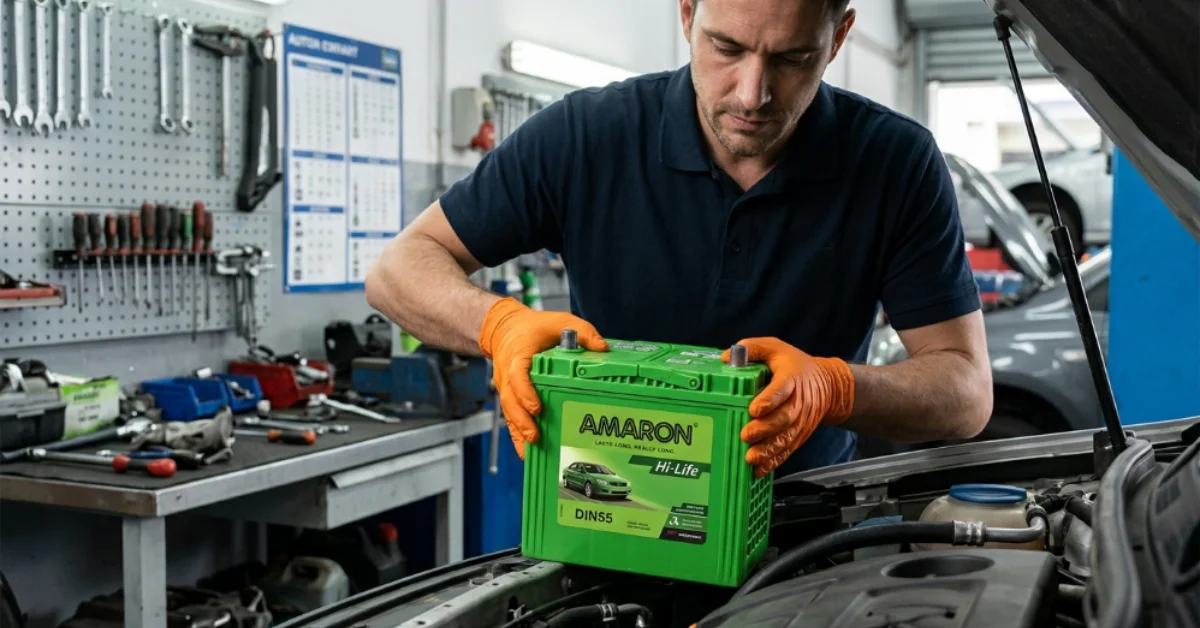
Choosing the right battery is one of the most important parts of maintaining your vehicle. A battery that matches your car’s specifications provides reliable engine starts, supports the electrical system, and lasts longer. Installing the wrong battery can lead to poor performance, charging problems, or even installation issues.
Finding the right Amaron battery for your car model is easier when you know what to check before buying. Start by identifying your vehicle’s make, model, manufacturing year, engine type, battery size, and terminal layout.
Amaron offers several battery series, including GO, FLO, Hi-Life Pro, Jade, and Black, to suit different vehicles and driving conditions. By following a few simple steps, you can choose a battery that delivers dependable performance and fits your vehicle perfectly.
Why Is Choosing the Right Battery Important?
A car battery does much more than start the engine. It supplies power to the ignition system, lights, infotainment screen, air conditioning controls, sensors, and many other electrical components.
If the battery is too small, has the wrong terminal layout, or does not meet the recommended specifications, your vehicle may experience starting issues or electrical problems.
Selecting the correct battery helps maintain stable voltage, improves charging efficiency, and protects sensitive vehicle electronics while providing reliable performance for years.
Steps to Find the Right Amaron Battery for Your Car Model
Step 1: Check Your Vehicle's Make, Model, and Manufacturing Year
The first step is identifying your vehicle’s exact make, model, and manufacturing year. Battery specifications often change between different generations, even when the vehicle name remains the same.
For example, a 2012 Honda City may require a different battery than a 2024 Honda City. The same applies to many Toyota, Nissan, Hyundai, Kia, and Mitsubishi models.
Always verify your vehicle information using the owner’s manual or registration documents before selecting a replacement battery.
Step 2: Identify Your Engine Type
The engine type has a direct impact on the battery your vehicle requires. Petrol engines generally need moderate Cold Cranking Amps (CCA), while diesel engines require significantly higher starting power because of their higher compression ratio.
Larger engines, turbocharged vehicles, and SUVs may also require batteries with greater reserve capacity.
Knowing your engine size and fuel type helps you choose a battery that provides reliable starts while supporting your vehicle’s electrical system efficiently.
Step 3: Read the Specifications on Your Existing Battery
The easiest way to find a compatible replacement is by checking the battery already installed in your vehicle. The label contains important information that should match your new battery as closely as possible.
These specifications help ensure proper fitment, reliable performance, and efficient charging after installation.
Specification | Why It Matters |
Voltage (V) | Must match your vehicle’s electrical system, usually 12V. |
Capacity (Ah) | Determines how much electrical energy the battery can store. |
Cold Cranking Amps (CCA) | Indicates the battery’s engine starting power. |
Battery Group Size | Ensures the battery fits correctly inside the battery tray. |
Terminal Layout | Matches the position of the positive and negative terminals. |
Terminal Type | Ensures the battery clamps fit securely during installation. |
Matching these specifications reduces the risk of installation problems and helps your alternator charge the battery correctly.
If the original battery label is damaged or difficult to read, consult your owner’s manual or ask a professional battery technician to verify the correct replacement.
Step 4: Confirm the Correct Battery Group Size
Battery group size refers to the battery’s physical dimensions, terminal arrangement, and mounting design.
Even if two batteries have similar electrical ratings, they may not fit your vehicle if the group size is different. Manufacturers design battery trays for specific battery sizes, making this one of the most important compatibility checks before purchasing a replacement.
Battery Group | Common Vehicle Types |
B20 | Small Japanese hatchbacks and sedans |
B24 | Honda, Toyota, Nissan sedans |
D26 | SUVs and pickup trucks |
D31 | Large diesel SUVs and commercial vehicles |
DIN55 | European compact cars |
DIN65 | Modern sedans and SUVs |
DIN74 | Luxury vehicles |
DIN80 | Large diesel vehicles |
Installing the correct group size ensures the battery fits securely without moving inside the battery tray. A properly fitted battery experiences less vibration, helping improve reliability and extend its service life.
Step 5: Check the Terminal Layout and Terminal Type
Battery terminals are not the same on every vehicle. Before purchasing a replacement, compare the terminal layout with your existing battery.
Many Amaron car batteries use L to indicate the positive terminal on the left side and R for the positive terminal on the right side. Some Japanese batteries also include the letter S, which identifies standard-sized battery posts.
Selecting the wrong terminal configuration may prevent the battery cables from reaching the terminals or result in loose electrical connections.
Terminal Code | Meaning |
L | Positive terminal on the left |
R | Positive terminal on the right |
S | Standard thick battery terminals |
Always confirm the complete battery model number before making your purchase to ensure both the terminal layout and terminal size match your vehicle.
Step 6: Match the Battery Capacity to Your Driving Needs
The battery should not only fit your vehicle but also support the way you drive. Daily commuters often achieve the best performance by choosing a battery that matches the original factory specifications.
Drivers who regularly take long trips, operate SUVs, or use additional accessories such as upgraded audio systems, refrigerators, auxiliary lights, or winches may benefit from a battery with higher reserve capacity.
Selecting the correct capacity helps maintain stable electrical performance without placing unnecessary strain on the charging system.
Step 7: Choose the Right Amaron Battery Series
Amaron manufactures several battery series to suit different budgets, vehicle types, and driving conditions. Understanding the purpose of each series makes it easier to choose the right battery for your car.
While all Amaron batteries are maintenance-free and designed for durability, each series offers different levels of performance and technology.
Amaron Series | Best For |
GO | Budget-friendly replacement batteries |
FLO | Everyday city and highway driving |
Hi-Life Pro | Premium performance and longer service life |
Jade (AGM/EFB) | Start-Stop vehicles and heavy electrical loads |
Black | Commercial and fleet vehicles |
If you drive a standard passenger car, the GO or FLO series may be sufficient. Drivers who spend long hours on the road or own larger SUVs often prefer the Hi-Life Pro series.
Vehicles with Start-Stop technology or extensive electrical accessories perform best with the Jade Series, while commercial vehicles benefit from the durability of the Black Series.
Step 8: Consider Your Local Driving Conditions
Your driving environment also plays a major role in battery performance. In the UAE, high temperatures, heavy traffic, and continuous air conditioning use place extra stress on every battery.
Vehicles that frequently travel off-road or operate in dusty conditions also require batteries with greater vibration resistance.
Choosing an Amaron battery designed for hot climates helps improve reliability, reduce corrosion, and maintain consistent starting performance throughout the year.
Factors that affect battery life include:
- Extreme Heat: High temperatures accelerate battery wear and shorten overall battery life.
- Heavy Traffic: Frequent stop-and-go driving reduces charging efficiency.
- Continuous Air Conditioning: Constant electrical demand increases battery workload.
- Off-Road Driving: Rough terrain creates vibration that can damage weaker batteries.
- Frequent Short Trips: Short journeys may not allow the alternator enough time to fully recharge the battery.
Step 9: Verify Compatibility Before Purchasing
Before buying a replacement battery, compare all specifications with your existing battery or consult your owner’s manual. Check the battery size, voltage, capacity, CCA, terminal layout, and terminal type to confirm compatibility.
If you are still unsure, ask a trusted battery specialist to verify the correct model before installation. Spending a few extra minutes confirming compatibility can help prevent installation issues, improve battery performance, and save money in the long run.
Common Signs You May Have the Wrong Battery Installed
Installing the wrong battery can cause several noticeable problems. Identifying these warning signs early can help prevent damage to your vehicle’s electrical system and avoid unexpected breakdowns.
- Slow Engine Cranking: The engine takes longer than usual to start, especially in the morning.
- Loose Battery Fit: The battery moves inside the tray because it is the wrong physical size.
- Electrical Problems: Lights, infotainment, and power accessories perform inconsistently.
- Loose Battery Clamps: Incorrect terminal size prevents the clamps from tightening properly.
- Frequent Battery Failure: The battery repeatedly loses charge sooner than expected.
- Charging Issues: The alternator struggles to maintain the battery’s proper charge level.
Why Is Professional Battery Testing Worth It?
Professional battery testing helps confirm that your battery and charging system are working correctly before problems become serious. Technicians check battery voltage, Cold Cranking Amps, charging performance, and alternator output using specialized testing equipment.
They also inspect the battery terminals, mounting bracket, and electrical connections to ensure everything operates safely. Professional installation further reduces the risk of incorrect fitment and helps maximize the battery’s overall lifespan.
Buy Genuine Amaron Batteries from a Trusted Supplier
Buying from an authorized supplier ensures you receive a genuine Amaron battery with full warranty coverage and professional support. A trusted supplier can verify compatibility, recommend the correct battery model, and perform expert installation.
Many battery specialists also provide battery health testing, doorstep replacement services, and environmentally responsible recycling of old batteries. These services make the replacement process faster, safer, and more convenient for vehicle owners.
Conclusion
Finding the right Amaron battery is a simple process when you follow the correct steps. Start by checking your vehicle’s make, model, manufacturing year, engine type, battery size, terminal layout, and electrical requirements.
Matching these specifications ensures reliable engine starts, stable electrical performance, and a longer battery lifespan. Choosing the correct Amaron battery also helps protect your vehicle’s charging system and prevents unnecessary installation problems.
If you’re looking for a genuine Amaron battery in the UAE, Battery Zone UAE offers expert battery testing, professional Amaron battery replacement, doorstep installation, and old battery recycling services.